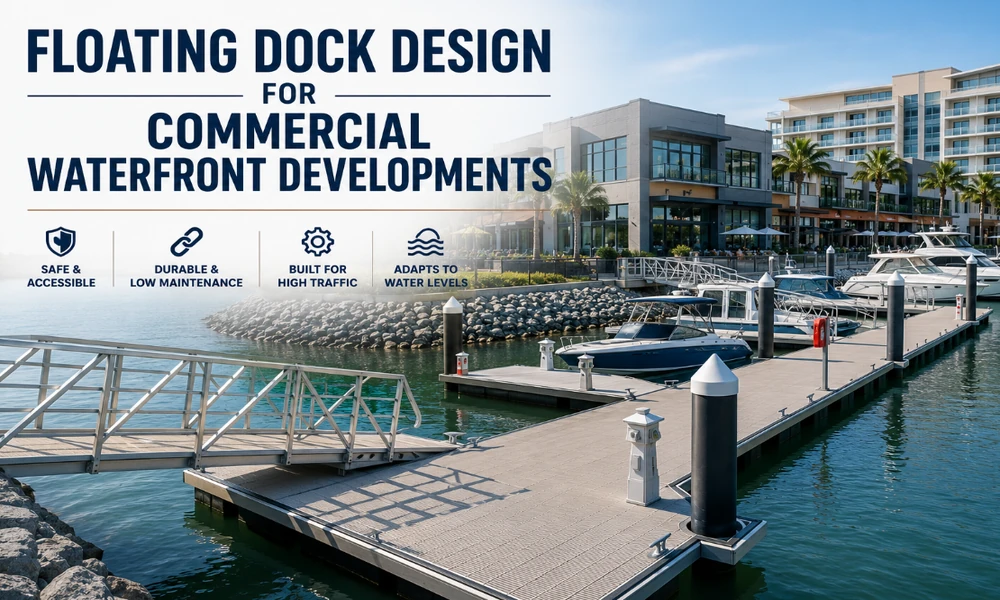

Commercial waterfront developments need docks that do more than provide access to the water.
A floating dock may serve boaters, marina guests, hotel visitors, restaurant customers, maintenance crews, or members of the public. Because of that, the design must balance safety, durability, appearance, and daily use.
The best floating dock systems are planned around the site. Water conditions matter. User traffic matters. The type of vessels using the dock matters too.
A dock that works well at a small private property may not be strong enough or practical enough for a busy commercial waterfront.
Start With the Waterfront Conditions
Every shoreline is different.
Some locations deal with strong tides. Others experience waves, changing water levels, heavy boat traffic, or seasonal storms. These conditions affect the dock’s size, anchoring system, materials, and layout.
A floating dock should move naturally with the water while staying stable enough for safe use.
Designers may need to consider:
- Tidal range
- Water depth
- Wave activity
- Current direction
- Soil conditions
- Wind exposure
- Storm surge risk
Ignoring these factors can lead to movement, uneven access, damaged connections, or higher maintenance costs later.
Plan for the Type of Use
Commercial docks may support several activities at the same time.
A marina may need slips for different boat sizes. A restaurant may need short-term docking for customers. A resort may require space for water taxis, kayaks, paddleboards, and maintenance vessels.
The dock layout should reflect how people will actually use the space.
Wide walkways may be needed in high-traffic areas. Loading zones may require more room for carts, supplies, or passenger movement. Separate sections can help keep recreational users away from service operations.
A clear traffic flow improves safety and makes the dock easier to manage.
Choose Materials for Long-Term Performance
Commercial floating docks are exposed to sun, water, salt, moisture, and constant foot traffic.
Material selection plays a major role in how long the system lasts.
Common deck surfaces include composite decking, treated wood, aluminum, and concrete. Each option offers different benefits.
Composite materials can provide a clean appearance with lower routine maintenance. Aluminum is lightweight and resistant to many forms of corrosion. Concrete floating docks may offer excellent stability for marinas and larger commercial projects.
Fasteners, frames, hinges, and connectors also need to be suitable for the waterfront environment. Using incompatible metals or low-quality hardware can lead to early corrosion.
Accessibility Should Be Part of the Design
Public and commercial waterfront spaces should be easy to use for as many people as possible.
Gangway slope, handrails, surface texture, dock height, and transition points all affect accessibility.
Because floating docks rise and fall with the water, gangway angles can change throughout the day. The design should account for water-level changes and provide a safe path between the shore and dock.
Non-slip surfaces are also important. Wet decking can become dangerous, especially in busy areas where guests may be carrying bags, equipment, or supplies.
Include Utilities From the Beginning
Many commercial docks need more than a walking surface.
They may require:
- Electrical service
- Water connections
- Lighting
- Fire safety equipment
- Fuel access
- Security systems
- Internet or communication lines
These utilities should be planned early.
Adding them after installation may create visible wiring, difficult repairs, or safety problems. Built-in utility channels can keep the dock cleaner and make maintenance easier.
Lighting should improve visibility without creating glare for boaters or nearby properties.
Think About Maintenance Access
Even a well-built floating dock needs regular inspection and upkeep.
The design should make it easy to reach anchor points, utility lines, flotation units, and connection hardware. Removable panels or accessible service areas can reduce repair time.
Commercial properties should also have a maintenance plan for cleaning, hardware checks, storm preparation, and surface repairs.
Small issues are easier to manage when they are found early.
Balance Function With Appearance
A floating dock is often one of the first things visitors notice at a waterfront property.
Its shape, color, materials, railings, and lighting should match the surrounding development.
A modern hotel may need a clean and minimal dock design. A coastal restaurant may prefer a warmer, more traditional style. A public marina may focus more heavily on visibility, durability, and easy navigation.
Good design does not separate appearance from function. It brings both together.
A commercial floating dock should feel like a natural part of the waterfront, not an added structure.
When site conditions, user needs, accessibility, materials, and maintenance are considered from the start, the result is a dock system that works better and lasts longer.
This post was written by a professional at Supreme Marine Floating Docks. Supreme Marine Floating Docks is dedicated to providing top-quality floating dock services Miami and marine accessories that combine durability, innovation, and superior performance. While we are a new brand, our team brings over 50 years of combined industry experience, making us a trusted name in the marine world. We are passionate about designing and delivering products that meet the highest standards, ensuring reliability and longevity in all marine environments. Whether for residential, commercial, or recreational use, our docks are crafted with precision and care, setting a new benchmark in the industry. At Supreme Marine, we don’t just build docks-we create lasting solutions.